WASHINGTON — The Supreme Court on Thursday ensured that the abortion pill mifepristone can continue to be available by mail without an in-person appointment with a clinician.
Subscribe to read this story ad-free
Get unlimited access to ad-free articles and exclusive content.

A ruling by the New Orleans-based 5th U.S. Circuit Court of Appeals on May 1 had imperiled widespread access to the pill. Now, the Supreme Court has granted emergency requests brought by drugmakers Danco Laboratories and GenBioPro seeking to block that ruling.
Two conservative members of the court, Justice Clarence Thomas and Justice Samuel Alito, dissented.
The decision, a loss for the state of Louisiana, ensures there will not be any disruption to the availability of the drug as litigation continues. On May 4, in an order issued by conservative Justice Samuel Alito, the court had provisionally put the appeals court ruling on hold while the justices considered their next steps.
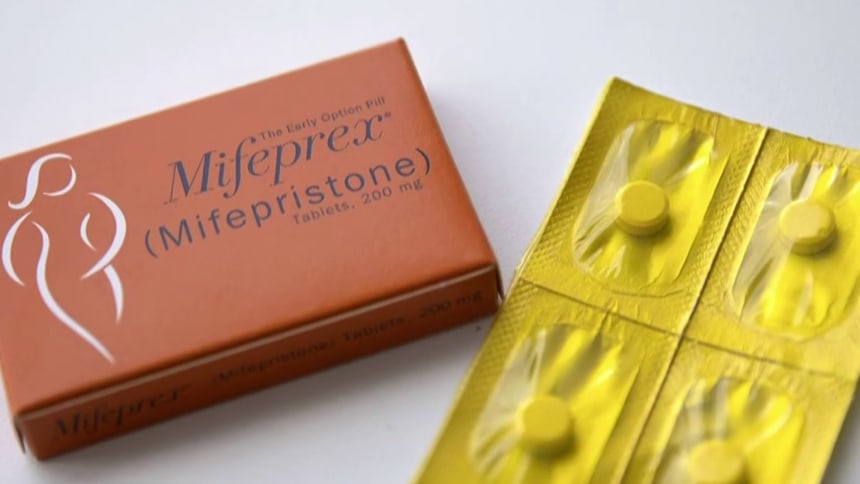
The underlying case involves Louisiana’s challenge to a 2023 decision made by the Food and Drug Administration during the Biden administration that allows mifepristone to be administered without an in-person appointment, allowing access to the drug even in states where abortion is banned.
The move, made after the Supreme Court overturned abortion rights landmark Roe v. Wade a year earlier, makes the drug available by mail nationwide.
Anti-abortion groups have been pushing to reinstate the in-person dispensing requirement, alleging that taking mifepristone at home can be dangerous, although studies have found it to be safe and effective.
In asking the Supreme Court not to intervene, Louisiana Attorney General Liz Murrill, a Republican, wrote in court papers that even though abortion is almost totally banned in the state, up to 1,000 abortions a month are taking place because of mifepristone pills being mailed to women there.
Mifepristone is used as part of a two-drug FDA-approved regimen that is now the most common form of abortion in the U.S. It is also used in miscarriage care.
Danco makes Mifeprex, the brand-name version of mifepristone, while GenBioPro makes the generic version.
The companies argued that Louisiana did not have standing, citing the Supreme Court’s 2024 decision that rejected a similar challenge to the FDA’s approvals of mifepristone on the grounds that the plaintiffs could not show they had suffered any injury.
In an unusual move, the Trump administration did not file a brief at the Supreme Court even though the FDA is technically a defendant in the case.
The government did file in the appeals court case, urging the court to rule in favor of the drug companies on the basis that Louisiana did not have legal standing to bring its claims.
The FDA is currently reviewing the safety protocols for mifepristone, meaning that availability by mail could still be overturned. Louisiana’s lawsuit “not only would disrupt FDA’s ongoing review, and usurp FDA’s scientific role, but would also threaten chaos,” the Justice Department told the appeals court.
Abortion is effectively banned altogether in 13 states, while several others have tight restrictions, according to the Guttmacher Institute, a research group that backs abortion rights.